Common Recording Mistakes Independent Artists Make
Common Recording Mistakes Independent Artists Make
A recording session can become expensive very quickly when you're using studio time to solve problems that could have been handled before you arrived. Forgetting lyrics, bringing the wrong instrumental, changing the song structure halfway through recording or relying on mixing to fix a weak take can all slow down the session.
The good news is that most recording mistakes are avoidable. A little preparation before you step into the studio can help you spend more time recording, creating and getting the performance you actually want.
What are the most common recording mistakes independent artists make?
Some of the most common mistakes include showing up unprepared, skipping rehearsal, bringing the wrong files, making major arrangement decisions during the session, using poor microphone technique, recording too many takes without purpose and expecting mixing to fix problems that should have been addressed during recording.
Here are the mistakes to watch out for before your next session.
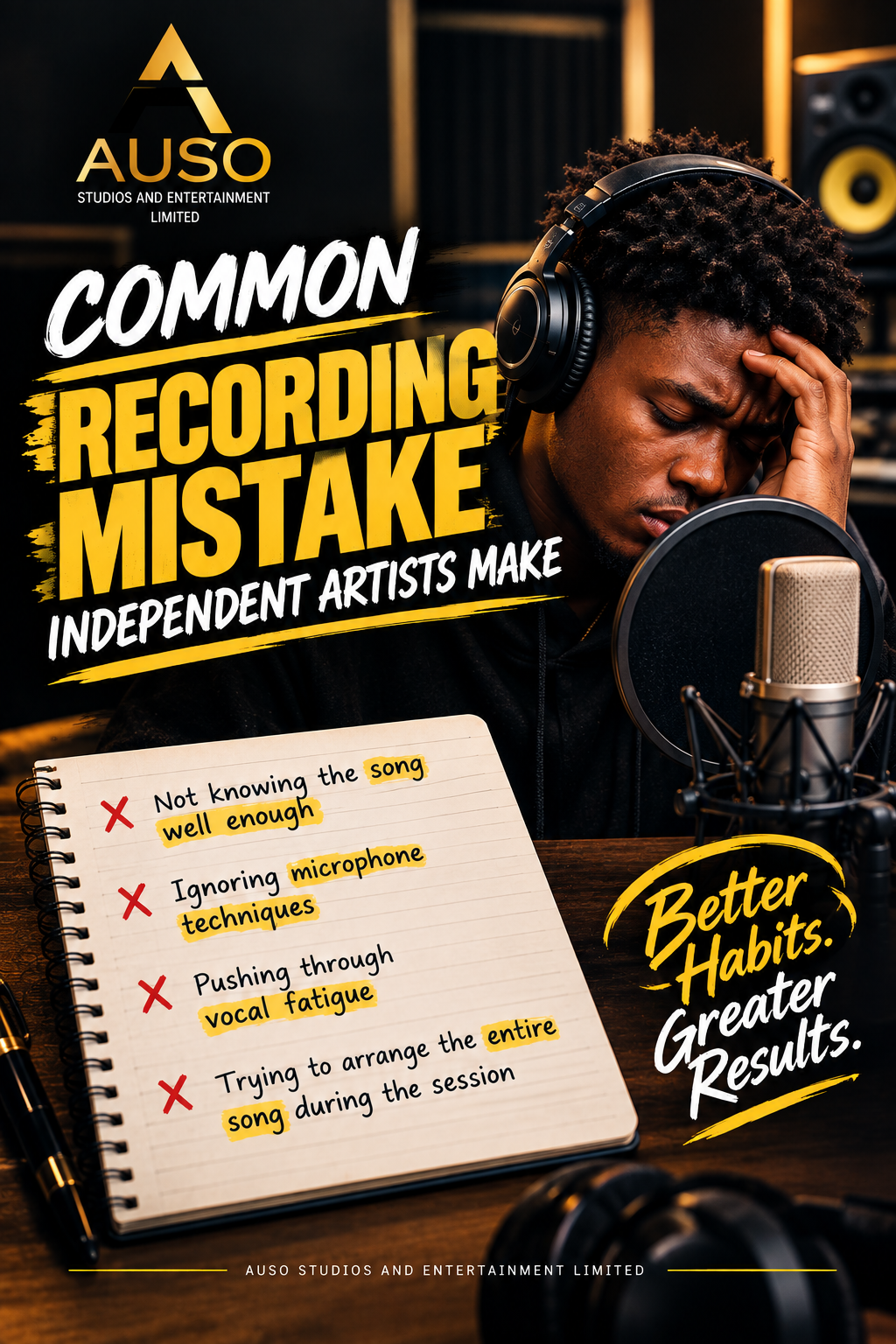
1. Not knowing the song well enough
You don't need every creative decision completely locked in, but you should know your lyrics, song structure and general delivery before you start recording.
If you're still trying to remember the second verse or decide where the chorus should come in, you're using paid studio time for preparation instead of recording.
Before your session, know where the verses, hooks, bridges, harmonies and ad-libs fit. You can still make creative changes in the studio, but having a solid starting point makes the session much smoother.
2. Skipping rehearsal before recording
Knowing your lyrics is not the same as being ready to perform them.
Rehearsing gives you the chance to work through your breathing, timing, melody, harmonies, ad-libs and difficult sections before stepping into the booth. It also helps you identify parts of the arrangement that may need work.
The goal is to arrive ready to perform, not learn the song for the first time in front of the microphone. Preparation and rehearsal are consistently highlighted as major factors in making studio sessions more productive.
3. Bringing the wrong files
This sounds simple, but it can easily delay a session.
Before leaving for the studio, confirm that you have the final instrumental or the exact version you're recording over, your lyrics, demo and any reference tracks you want the engineer or producer to hear.
If you have stems or multiple versions of the instrumental, label them clearly and check that you're bringing the right ones.
For independent artists recording in Lagos, where both travel and studio time have to be planned, checking your files before leaving can save you from discovering a problem after you've arrived.
4. Trying to arrange the entire song during the session
Creative changes are part of recording. The problem is spending most of the session deciding what the song should actually be.
Before recording, have a general idea of:
- Where the verses and hooks sit
- How the intro and outro should work
- Where harmonies and ad-libs come in
- Which sections need a different vocal delivery
- Whether the beat needs any changes
You can still experiment in the studio. The difference is that you're building on a plan rather than starting from zero.
5. Ignoring microphone technique and recording levels
You don't need to be an audio engineer to understand that how you perform in front of a microphone affects what gets recorded.
Standing too close can exaggerate low frequencies and harsh “p” and “b” sounds, while constantly changing your distance can make your vocal level and tone inconsistent.
Your engineer should also check your recording level before the main takes begin so the vocal is captured cleanly without clipping. Microphone placement and recording levels are both important parts of getting a usable recording from the start.
Your engineer can guide you on the appropriate position based on your voice, microphone and performance.
6. Recording take after take without a clear purpose
More takes don't automatically mean a better performance.
You may need several takes to capture the right delivery, and different takes can have different strengths. One may have better emotion, another better timing, while another may have the strongest ending.
The key is knowing what you're trying to improve. If a take needs to be redone, identify the problem and focus on it rather than recording endlessly.
Too many takes can also lead to fatigue and frustration, which can affect the energy of later performances.
7. Pushing through vocal fatigue
Your voice is your main instrument during a vocal session, so fatigue can affect the quality of your performance.
If you've been singing continuously for hours, your delivery can change and difficult sections may become harder to perform consistently.
Take breaks when necessary and tell your engineer if your voice is becoming tired. A proper warm-up and enough rest before an important session can also help you start in better shape.
If you're struggling with a particular section, another take isn't always the answer. Sometimes you simply need a short break.
8. Not communicating with your engineer
Your engineer cannot hear what you're hearing in your headphones.
If the instrumental is too loud, you can't hear your vocal properly, the headphone mix is uncomfortable or you want to try a different approach, say so.
The same applies to creative direction. If you have a reference for how you want a vocal delivered or a particular sound you're going for, communicate it.
A recording session works best when the artist, producer and engineer understand what they're trying to achieve.
9. Expecting mixing to fix a bad recording
“We'll fix it in the mix” isn't a solution to every recording problem.
Mixing can improve balance, EQ, dynamics, effects and clarity, but it cannot completely rescue every poor performance or badly captured recording.
If a vocal is badly clipped, excessively noisy or the performance itself isn't strong, the problem may still be noticeable after processing.
The better approach is to capture the strongest and cleanest performance possible at the recording stage. Mixing and mastering should build on a good recording, not be expected to rescue one.
10. Ending the session without knowing the next step
Recording the vocals doesn't necessarily mean the song is finished.
Before your session ends, know what still needs to happen. Do you need another vocal take, additional harmonies, editing, mixing or mastering?
This is especially useful when you're working on several singles or an EP. Having a clear next step helps you keep the project organized and avoid unnecessary back-and-forth.
How can I make my studio session more efficient?
A simple checklist before you leave home can prevent most of the problems discussed above:
- Know your lyrics and song structure.
- Rehearse your performance.
- Confirm your final instrumental or beat.
- Bring your demo and reference tracks.
- Organise your files clearly.
- Know what you want to achieve during the session.
- Give yourself time for breaks.
- Communicate clearly with your engineer.
Your studio time should be for decisions that require the studio—not decisions you could have made beforehand.
The more preparation you handle before the session, the more room you have for performance, creativity and getting the recording right.
Frequently Asked Questions
How should I prepare for a recording session?
Know your lyrics, rehearse the song, organize your instrumental and files, and have a clear idea of the performance you want. A demo or reference track can also help communicate your direction.
Do I need to rehearse before recording in a studio?
Not always, but rehearsal can help you use your session more efficiently. It allows you to work through lyrics, melodies, harmonies and difficult sections before recording.
How many takes should I record?
There is no fixed number. Record enough takes to capture a strong performance, but have a reason for doing another take. More takes do not automatically produce a better recording.
Can mixing fix a bad vocal recording?
Mixing can improve many aspects of a recording, but it cannot completely repair every problem. A strong performance and clean recording give the mix engineer a much better starting point.
What should I bring to a recording studio?
Bring your lyrics, final instrumental or beat, demo, reference tracks and any relevant creative notes. If you're using stems or multiple files, make sure they're clearly labelled.
Ready for your next recording session?
If you're looking for a recording studio in Ikeja, Lagos, AUSO Entertainment Studios offers recording and production, mixing and mastering, rehearsal, live sessions and podcast production.
Explore AUSO'S Studio Services or get in touch to discuss your next project.
Ready to book your session?
Recording, mixing and mastering, rehearsal space, live sessions, and podcast production — all under one roof in Ikeja, Lagos.
Book Studio Time