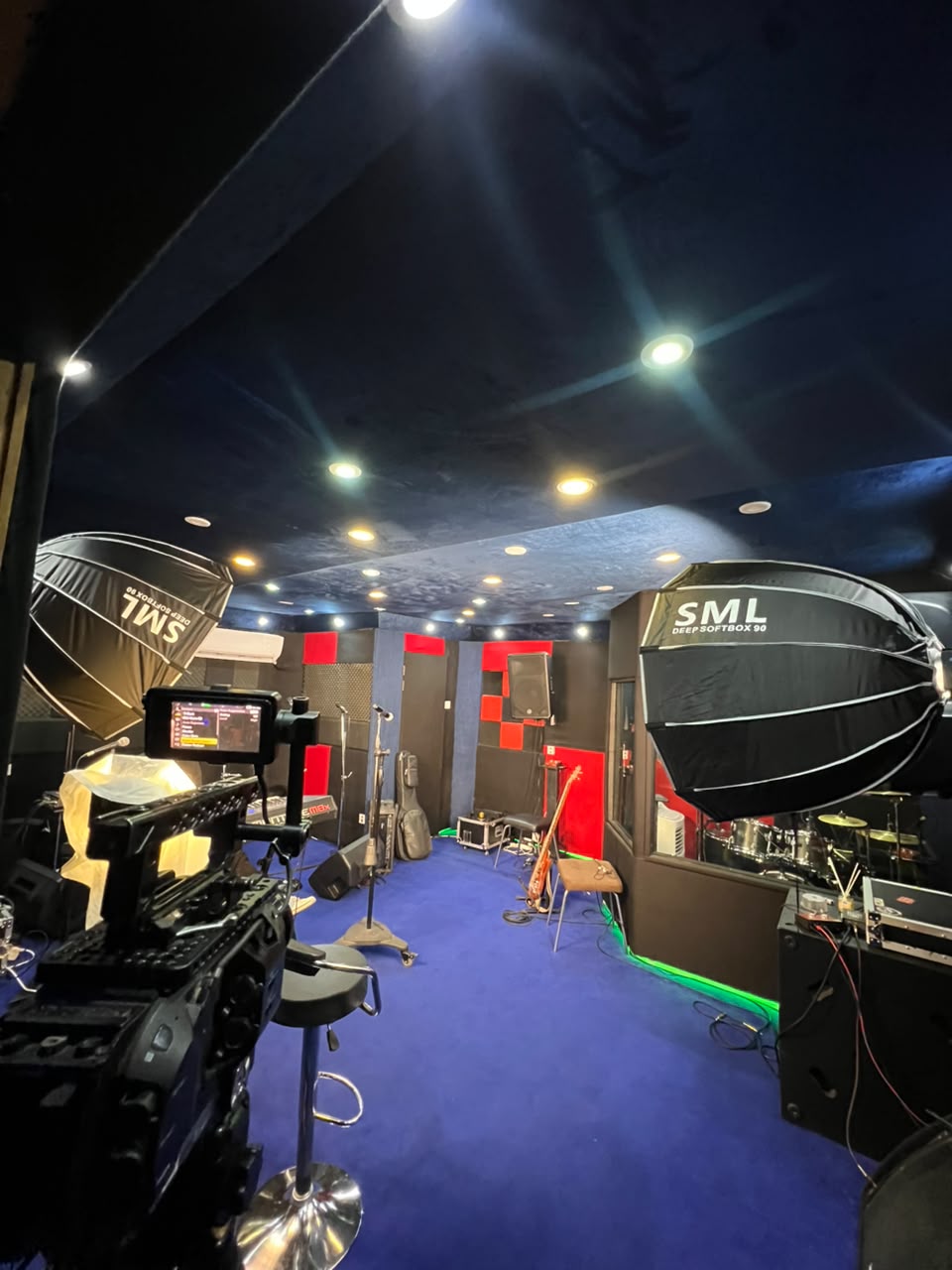
Mixing vs Mastering: What's the Difference?

Mixing vs Mastering: What's the Difference?
Your vocals may sound clear on their own but become difficult to hear when the instrumental comes in. Alternatively, your song may sound balanced in the studio but need further refinement before release.
Understanding the difference between mixing and mastering helps you identify what your music needs before investing in the next stage of production.
Mixing balances the individual tracks in a song, while mastering refines the completed mix and prepares it for release. Both contribute to the final sound, but they work on different material and serve different purposes.
What Is Mixing in Music Production?
Mixing brings recorded vocals and instruments together into a cohesive song. The engineer works with the individual tracks, considering how their levels, frequencies, dynamics and spatial positions interact.
Depending on the recording, mixing may involve:
Volume balancing: Establishing the relationship between the lead vocal, backing vocals, drums, bass and other instruments.
Equalisation (EQ): Shaping frequencies to address muddiness, harshness or competition between sounds.
Compression: Managing volume variations where necessary to help a performance sit consistently in the mix.
Panning: Positioning sounds across the stereo field to create separation and width.
Effects processing: Using reverb, delay and other effects to shape depth, space and character.
These techniques serve the song rather than follow a fixed formula. In a vocal-led worship recording, for example, the lead vocal needs to remain intelligible without losing its connection to the backing vocals and instruments. In a dense production, the relationship between the kick drum and bass may require particular attention.
A good mix is not simply a collection of impressive individual sounds. It is a balance in which the elements support the performance and arrangement.
Why can a vocal sound good alone but disappear in a mix?
A vocal can sound clear when played in isolation yet lose definition when the full instrumental comes in. Increasing its volume might help, but the underlying issue could be frequency masking, inconsistent dynamics or competition from other elements.
The engineer needs to identify what is causing the problem before deciding how to address it. Depending on the recording, this may involve adjusting the vocal, creating space in competing instruments or managing changes in vocal level.
The aim is to preserve the character of the performance while making the words and emotion come through in the complete song.
An Engineer’s Perspective: Getting Consistent Vocal Levels
“One challenge I often encounter while mixing is inconsistent vocal volume. Artists sometimes move around the microphone while performing, which can cause variations in their vocal levels. I address this by riding the vocals or using clip gain. It may seem like a small adjustment, but it makes a significant difference and puts the vocals in a much better position before a single plugin is used.”
— JOSHUA ''jaZZ'' UTOMI , PRODUCER & MIX ENGINEER , AUSO ENTERTAINMENT STUDIO
What Is Mastering?
Mastering is the final audio refinement stage after a mix has been approved. In a standard stereo mastering workflow, the engineer works with the completed stereo mix rather than making independent adjustments to each recorded track.
The focus shifts from balancing individual elements to evaluating the song as a whole. Mastering may involve:
Tonal refinement: Adjusting the overall frequency balance where necessary.
Dynamic control: Managing overall dynamics and peaks without unnecessarily compromising the music.
Loudness optimisation: Setting an appropriate final level for the intended release.
Translation checks: Listening for issues that may become apparent across different playback systems.
Final delivery: Preparing audio files according to the agreed technical specifications.
For an EP or album, mastering can also help tracks sit consistently together through appropriate relative levels, tonal balance, sequencing and spacing.
Mastering does not guarantee that a song will sound identical on every device, nor is its purpose simply to make the audio louder. It is a final opportunity to refine the approved mix and prepare it for its intended use.
Mixing vs Mastering: What's the Difference?
Mixing focuses on how the individual elements of a song work together. The engineer adjusts the levels, frequencies, dynamics and positioning of vocals and instruments to create a balanced, cohesive sound. This is the stage where issues such as a lead vocal getting lost beneath the instrumental can be addressed with greater control.
Mastering focuses on the completed mix as a whole. Once the mix is approved, the mastering engineer refines its overall tonal balance, dynamics and loudness where necessary, checks how it translates across playback systems, and prepares the audio for release.
The main difference is the level of control: mixing works primarily with individual tracks, while standard stereo mastering works with the finished mix. If an individual vocal or instrument needs adjustment, the mix may need revision before mastering can be completed.
Can Mastering Fix a Bad Mix?
Mastering can improve certain issues in a finished mix, but its ability to correct problems is limited by the material the engineer receives.
Consider a song in which the lead vocal is buried beneath the instrumental. With only the completed stereo file, the engineer generally cannot adjust the vocal independently as they could in the original multitrack session. Raising the overall level affects the instrumental too.
The same limitation applies to problems such as an individual backing vocal that is too loud or excessive reverb on one track. Returning to the mix usually provides more direct control over these elements.
Some issues can be improved through specialised processing or stem mastering, but the results depend on the source material and the severity of the problem.
When is the problem caused by recording rather than mixing?
Not every audio problem begins during mixing. Some originate when the sound is captured.
For example, a vocal recorded with unwanted background noise, severe distortion or an unsuitable microphone position may require attention before the mix can reach its full potential. Mixing can sometimes reduce the impact of these problems, but it cannot guarantee that a poor recording can be made clean.
By contrast, a vocal that was captured clearly but sits too quietly against the instrumental may need a mix adjustment rather than another recording session.
The distinction is important: recording determines what is captured, mixing shapes how the recorded elements work together, and mastering refines the completed mix for release. Identifying the source of the problem helps determine which stage is most likely to address it.
An Engineer’s Perspective: When a Problem Starts in the Mix
“I believe every single problem you encounter while mastering comes from the mix, 99 times out of 100. Personally, while mastering, any EQ move that exceeds about 2 dB of boost or attenuation, or anything above 1 dB of compression, often hints at a problem in the mix. The balance might be wrong, instruments may be piling up in a particular frequency band, or the mix may simply sound too squashed. All mastering problems, to me, are mixing problems.”
—JOSHUA ''jaZZ'' UTOMI, PRODUCER & MIX ENGINEER, AUSO ENTERTAINMENT STUDIOS
Do You Need Mixing, Mastering or Both?
Use the condition of your current audio to guide your decision.
Mixing: Choose this when the recorded elements need balancing, the vocals compete with the instrumental, or individual sounds need further adjustment.
Mastering: Consider this when the mix has been approved and needs final refinement and release preparation.
Both: If your recordings are complete but have not been mixed or mastered, you will generally need both stages.
If you are uncertain, have the audio assessed before committing to either service. Identifying the actual problem helps you avoid paying for mastering when the song still needs significant work at the mix level.
At AUSO Entertainment Studios in Ikeja, Lagos, artists can explore recording, mixing and mastering services according to their project's stage and requirements.
How to Prepare Your Song for Mixing and Mastering
Preparation helps prevent avoidable delays and gives the engineer the material needed to do the job properly.
Before mixing
Finalise the arrangement; Confirm the song structure, instrumental parts and vocal performances before detailed mixing begins.
Organize your recordings; Label the individual tracks clearly and confirm which audio files or session materials the engineer requires.
Keep separate files aligned; If you are supplying individual audio files, confirm the export requirements so the tracks can be placed correctly in the session.
Share reference tracks; Provide examples that communicate the vocal balance, low end or overall character you want. Explain what you like about them rather than expecting an identical result.
Before mastering
Approve the mix; Resolve problems that require individual-track adjustments before submitting the final version.
Confirm export requirements; Ask the mastering engineer about the preferred file format, sample rate, bit depth and other relevant specifications.
Explain the release plans; Confirm the intended use of the audio and whether you need individual tracks, an EP or album sequence, or alternative versions.
There is no single export setting that suits every project. Confirming the requirements with the engineer helps ensure that the supplied files are appropriate for the intended workflow.
Frequently Asked Questions
Can you master a song without mixing it?
Yes, if the song already has a suitable, approved mix. If individual elements are poorly balanced, those issues may need to be addressed before mastering.
How do I know if my song needs mixing or mastering?
If a particular vocal or instrument is too loud, too quiet or competing with another element, the song may need mixing. If the mix is already balanced and needs overall refinement, mastering may be appropriate. An engineer can assess the audio to help determine the next step.
Do I need to send individual tracks for mastering?
Not for standard stereo mastering, which uses the approved stereo mix. Stem mastering is a different workflow that uses separate grouped audio elements. Confirm which files your engineer requires before exporting.
Can mastering fix clipping or distortion?
It depends on the cause and severity. Some unwanted artefacts may be reduced, but distortion embedded in the original recording may not be fully recoverable. Addressing the problem earlier in the recording or mixing process generally gives the engineer more control.
Find Out What Your Track Needs Next
Before deciding on the next stage, identify whether the issue comes from the original recording, the balance between tracks or the completed mix.
Ready to book your session?
Recording, mixing and mastering, rehearsal space, live sessions, and podcast production — all under one roof in Ikeja, Lagos.
Book Studio Time