Rehearsal Studio vs. Home Practice: What Actually Changes Your Sound?
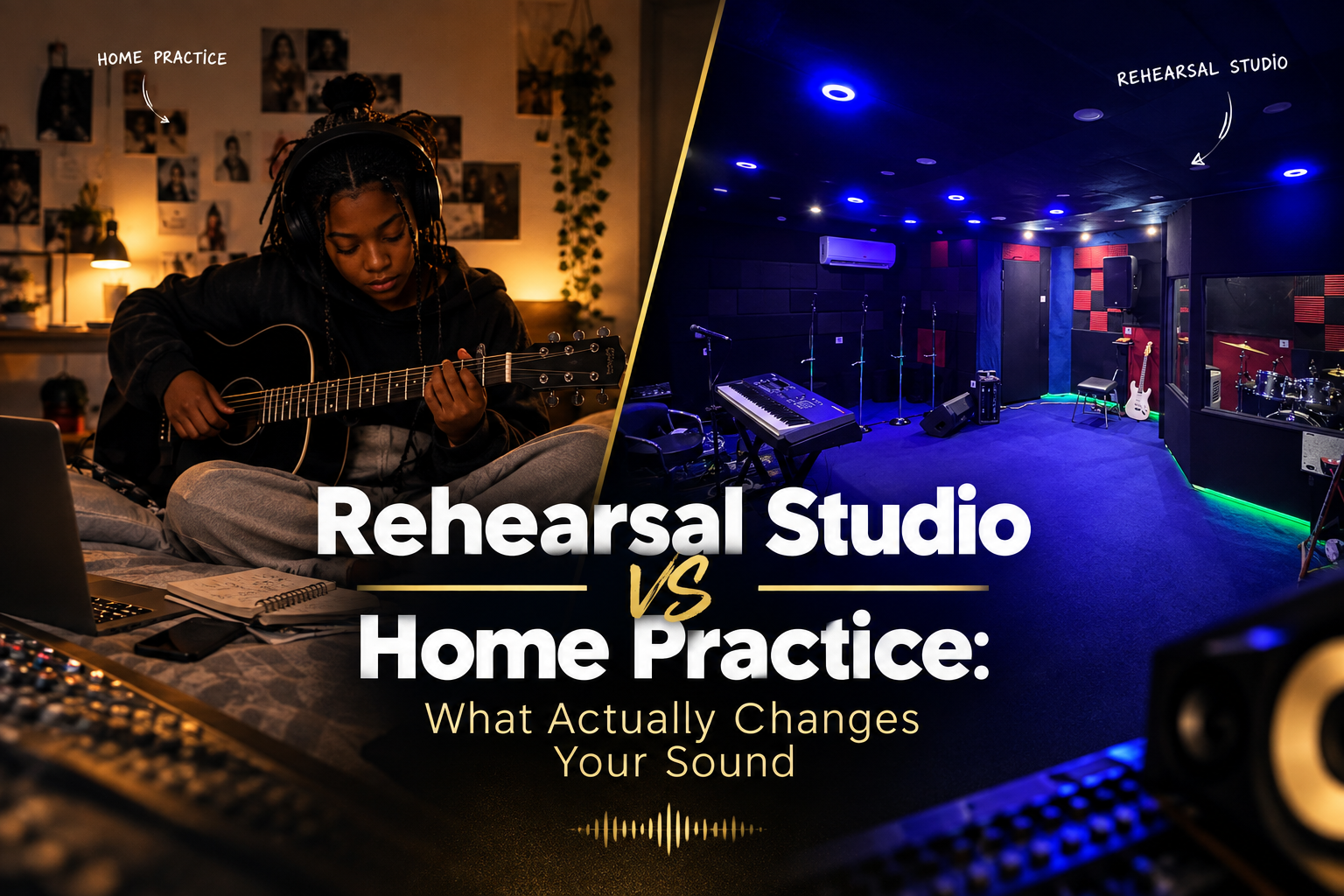
Rehearsal Studio vs. Home Practice: What Actually Changes Your Sound?
Practicing at home is convenient. You can work through a song, repeat difficult sections and develop your individual skills without booking a studio.
But when you are preparing to perform, record or simply want to take your rehearsal further, the environment you practice in starts to matter.
A rehearsal studio gives you a dedicated space with equipment and a setup designed for music practice. This can change how you hear your performance, test different parts of a song and prepare for a recording or live session. Room acoustics are also an important part of rehearsal design, with international guidance recognising different acoustic requirements for music rehearsal spaces.
That does not make home practice less useful. The two simply serve different purposes.
Quick answer: Is a rehearsal studio better than practicing at home?
A rehearsal studio gives you a dedicated environment to practice, refine your performance and work with the equipment and setup available to you. Home practice is useful for regular repetition, songwriting and developing specific skills.
The biggest difference is not simply where you practice. It is what you are able to hear, test and improve in each environment.
What actually changes when you move from home to a rehearsal studio?
1. You hear and work on your music differently
Practicing at home allows you to focus on your own vocals, instrument, lyrics or difficult sections. A rehearsal studio gives you access to equipment and a setup designed specifically for music practice, which can change how you work on your performance.
For artists rehearsing with other musicians, the difference becomes even more noticeable. Drums, bass, guitars, keyboards, vocals and other elements now have to work together as one arrangement.
That is when problems can become obvious. The vocals may get lost when the full band comes in, a transition may feel too long, or a section that sounded fine individually may not work when everything comes together.
Whether you are rehearsing alone or with a group, having the right equipment and rehearsal setup can make it easier to focus on the parts of your performance that need work.
2. The acoustics change what you hear
Sound does not behave the same way in every environment.
Walls, ceilings, floors, furniture and other surfaces reflect and absorb sound differently. Those reflections affect how clearly you hear instruments and voices.
This is why acoustic treatment matters in rehearsal spaces. PreSonus notes that sound reflections can make it harder for musicians to hear themselves and their bandmates clearly, while ISO 23591 provides acoustic criteria for music rehearsal spaces (guidelines for how sound should behave in a rehearsal room).
So when you move from an ordinary home environment to a purpose-built rehearsal space, you are not simply changing location. You are changing the acoustic environment in which you evaluate your music.
3. Volume becomes part of the rehearsal
There are situations where you simply cannot reproduce the same playing conditions at home.
For musicians working with drums, amplified instruments or other equipment, volume can be difficult to manage in a residential environment. You may also have limited space to move, set up equipment or practice comfortably.
A suitable rehearsal space gives you a dedicated environment where you can practice without making the session dependent on the limitations of your home.
The goal, however, is not to make everything as loud as possible. Good rehearsal is about hearing clearly, staying in control and improving your performance.
4. You practice the performance, not just the song
Knowing a song is different from being ready to perform it.
At home, you can stop after a mistake and start again. During a live performance, the song keeps moving.
Rehearsal gives you the chance to practice transitions, entrances, vocal delivery, backing vocals, movement and what happens when something does not go exactly as planned.
For solo artists, this could mean working through your vocal performance, instrumental parts, stage delivery or setlist. When other performers are involved, it can also mean tightening the way everyone works together.
That makes rehearsal useful for preparing for a live show, church performance, concert, live recording or any situation where you need to perform with confidence and consistency.
Home practice still matters
It is easy to turn this into a “home versus studio” argument, but that misses the point.
Home practice is where individual consistency is built.
You can use it to learn lyrics, practice melodies, work on technique, develop songs and repeat difficult sections.
A rehearsal studio can then give you another environment to practice those skills, test your performance and prepare for what comes next.
The two environments work better as part of the same process than as competitors.
When should you book a rehearsal studio?
You do not need a rehearsal room every time you want to practice.
A session becomes particularly useful when you have a specific goal:
- Preparing for a live performance
- Refining vocals or instrumental performance
- Tightening a song arrangement
- Rehearsing with a band or ensemble
- Preparing for a live recording
- Working through transitions and setlists
- Testing how your performance works in a dedicated rehearsal environment
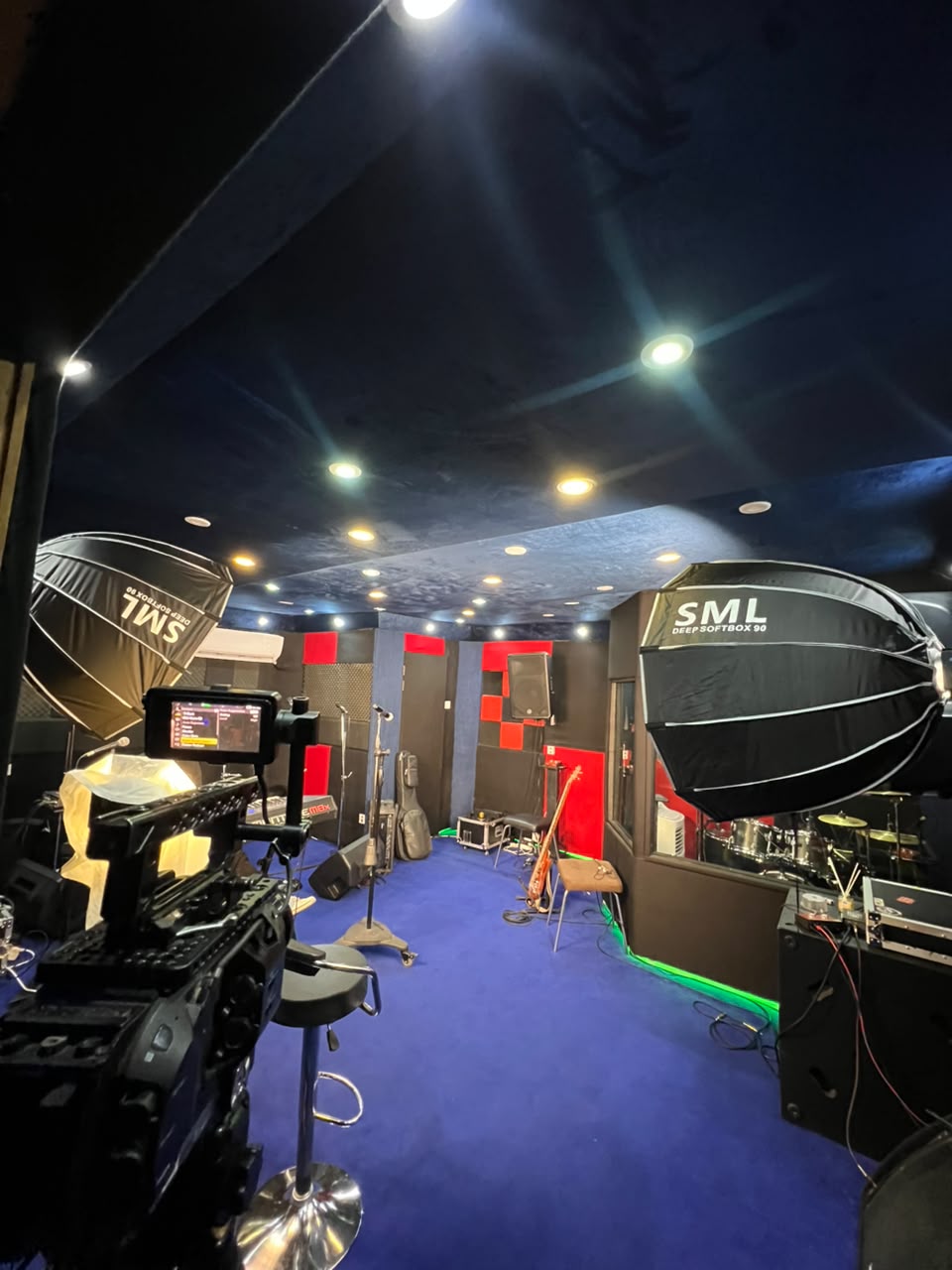
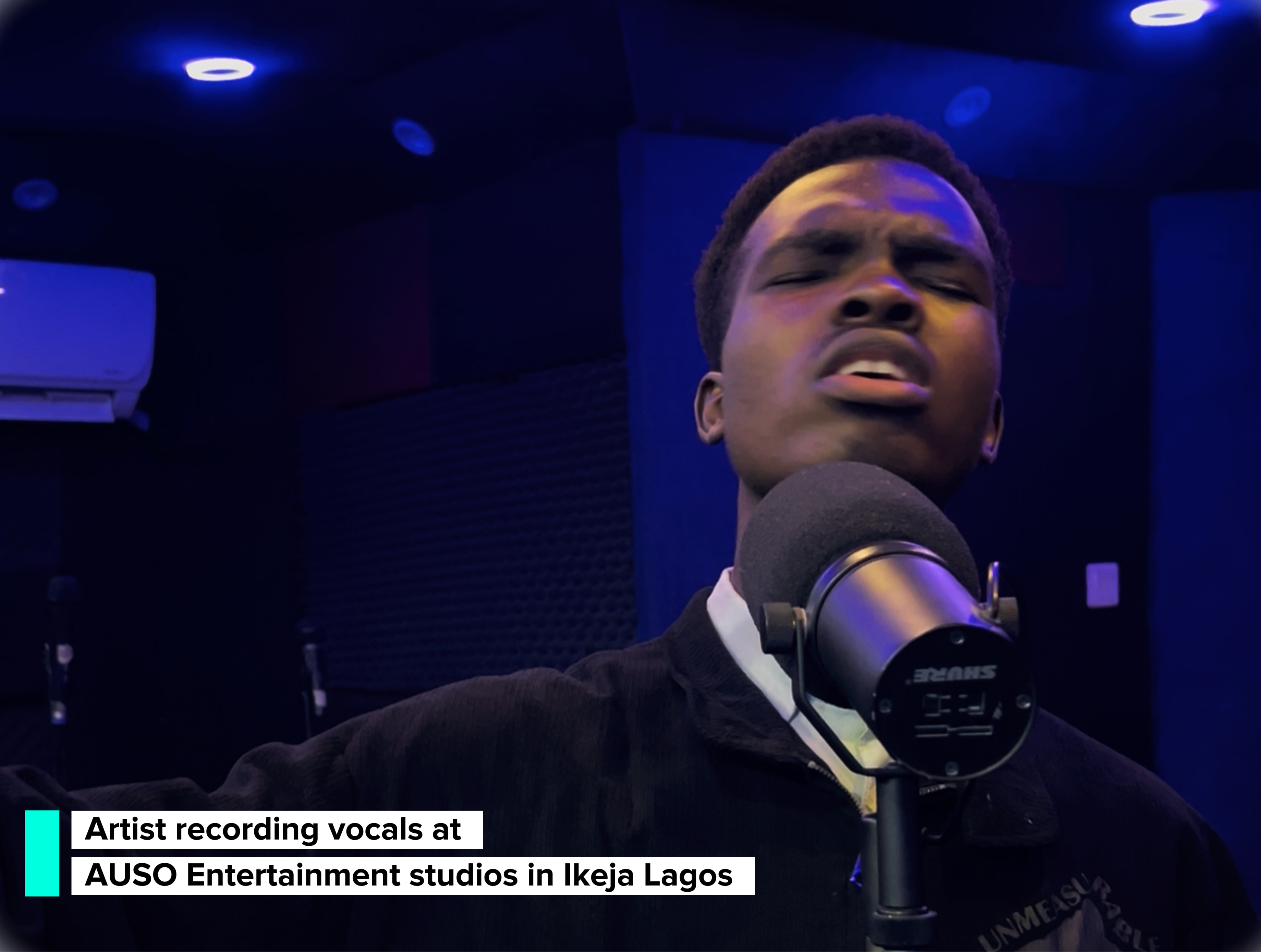
At AUSO Entertainment Studios in Ikeja, Lagos, rehearsal sessions can be part of your preparation before moving into recording, mixing and mastering or a live session.
How to make your rehearsal time count
Do not arrive without a plan.
Know which songs or sections you are working on and identify the parts that need attention. If you are rehearsing with other performers, make sure everyone knows their parts before the session where possible.
Most importantly, listen back to a rehearsal recording when you can. Hearing the session afterwards can reveal timing, arrangement and performance issues that are easy to miss while you are performing.
That turns rehearsal time into more than repetition. It becomes a way to evaluate and improve your performance.
FREQUENTLY ASKED QUESTIONS
Is it better to practice music at home or in a studio?
Neither is universally better. Home practice is useful for regular individual practice, while a rehearsal studio gives you a dedicated environment to refine your performance, use a music-focused setup and rehearse with other performers when needed.
Does a rehearsal studio improve your sound?
A suitable rehearsal space can improve how clearly you hear and evaluate your music through appropriate acoustics, sound treatment and equipment. It does not automatically make a performance better, but it can make certain musical and performance issues easier to identify.
Should I practice at home before booking a rehearsal studio?
You can. Home practice can help you build consistency and work through your individual parts, while a rehearsal studio gives you another environment to practice, refine your performance and prepare for a recording or live session.
Do singers need a rehearsal studio?
Yes, a rehearsal studio can be useful for singers preparing for a recording or live performance. You can use the session to work on vocal delivery, timing and performance, whether you are rehearsing alone or with musicians and backing vocalists.
Should I rehearse before recording?
Rehearsing before recording can help you feel more prepared and identify parts of the song that need adjustment. You can rehearse at home or use a rehearsal studio, depending on what you need to work on. A studio can be particularly useful when you want to practice with the available equipment, work on your performance in a dedicated space or rehearse with other performers.
The real difference is what you are preparing for
Home practice gives you the flexibility to rehearse regularly, work on your skills and repeat difficult sections.
A rehearsal studio gives you a dedicated environment to take that practice further, refine your performance and prepare for a recording or live session.
You do not have to choose one over the other. Both can be part of your preparation; the right option depends on what you need to practice and the kind of performance you are preparing for.
If you are ready to take your next rehearsal beyond home practice, explore AUSO Entertainment Studios in Ikeja, Lagos and book a session that fits your project.
Ready to book your session?
Recording, mixing and mastering, rehearsal space, live sessions, and podcast production — all under one roof in Ikeja, Lagos.
Book Studio Time